
The Rise of Zero-Shot Modeling
Artificial intelligence is reshaping economics. A key innovation is the zero-shot model, AI, thatcan solve tasks it was never trained on. For economists, this means faster forecasts, new ways
to use data, and insights without custom-built models
Why Zero-Shot Matters
Speed and Scale: Economists usually build new models for each case. Zero-shot systems
adapt instantly, saving time and effort.
Bridging Data Gaps: In regions with scarce data, zero-shot approaches provide useful insights.
Merging Text and Numbers: Zero-shot AI can read corporate transcripts, central bank
minutes, and combine them with data. This creates richer economic signals.
According to McKinsey, generative AI could add $2.6–$4.4 trillion annually to the global
economy. (McKinsey)
Evidence From Research
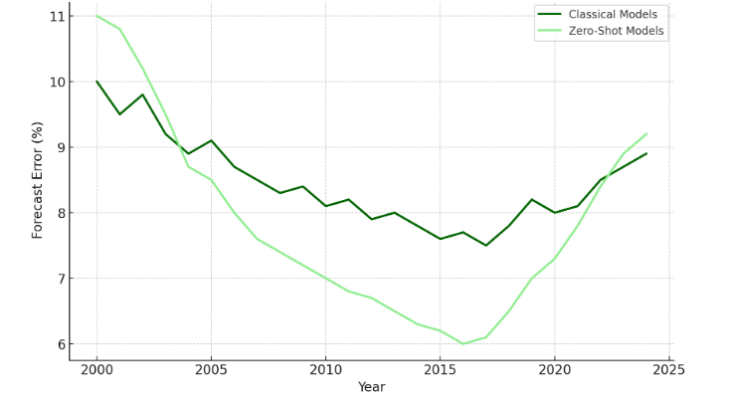
Studies show that time-series foundation models (TSFMs) can forecast GDP in zero-shot mode.
They perform well in stable periods but weaken during shocks. (Arxiv)
Figure 1. Performance of Zero-Shot Models vs. Classical Forecasting (2000–2024)
Zero-shot learning also predicts the S&P 500 index from constituent data with strong accuracy.
And text-based models already classify financial disclosures effectively. (BIS, PLOS)
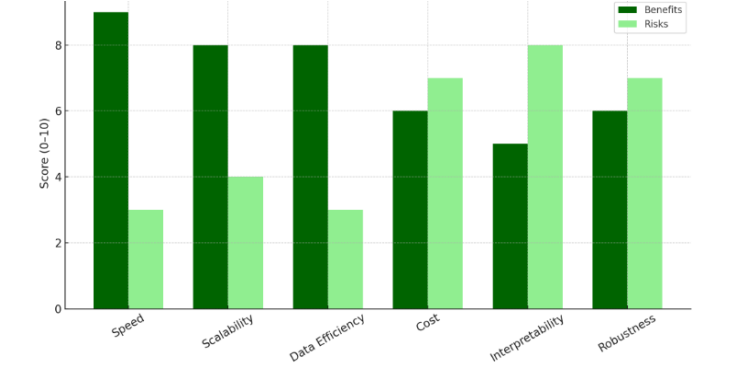
Opportunities and Risks
Opportunities:
- Faster deployment
- Insights into poor data areas
- Integration of text and data
Risks:
- Fragility during crises
- Overconfident predictions
- High computational cost
Figure 2. Potential Benefits vs. Risks of Zero-Shot Models
How to Adapt
Businesses and policymakers should:
- Mix zero-shot AI with traditional econometrics.
- Add safeguards for shocks.
- Monitor results continuously.
- Document limitations for transparency.
How TAMVER CONSULTING Helps
At TAMVER CONSULTING, we guide clients through the new frontier of AI-driven economics.
Our services include:
- Custom AI Strategy: Integrating zero-shot models into existing workflows.
- Risk Management: Building safeguards for economic shocks.
- Data Solutions: Using zero-shot models to fill gaps where traditional data is limited.
- Training & Foresight: Equipping teams with skills to adapt to fast-moving AI trends.
We help businesses and policymakers embrace zero-shot models responsibly, ensuring
resilience and competitiveness in a changing world.
Conclusion
Zero-shot models are not flawless. But they are a powerful new tool for economics. Those who
adopt early, with the right safeguards, will shape the next generation of economic analysis
References